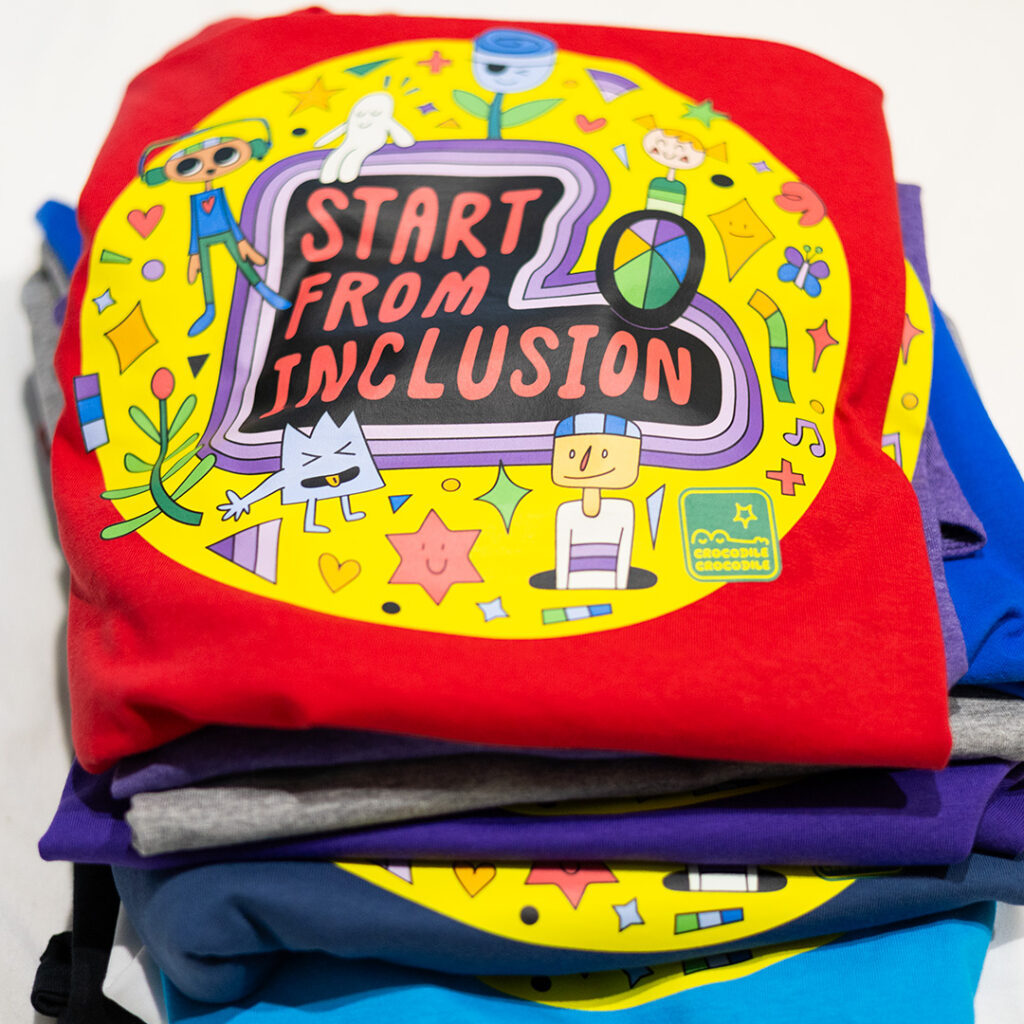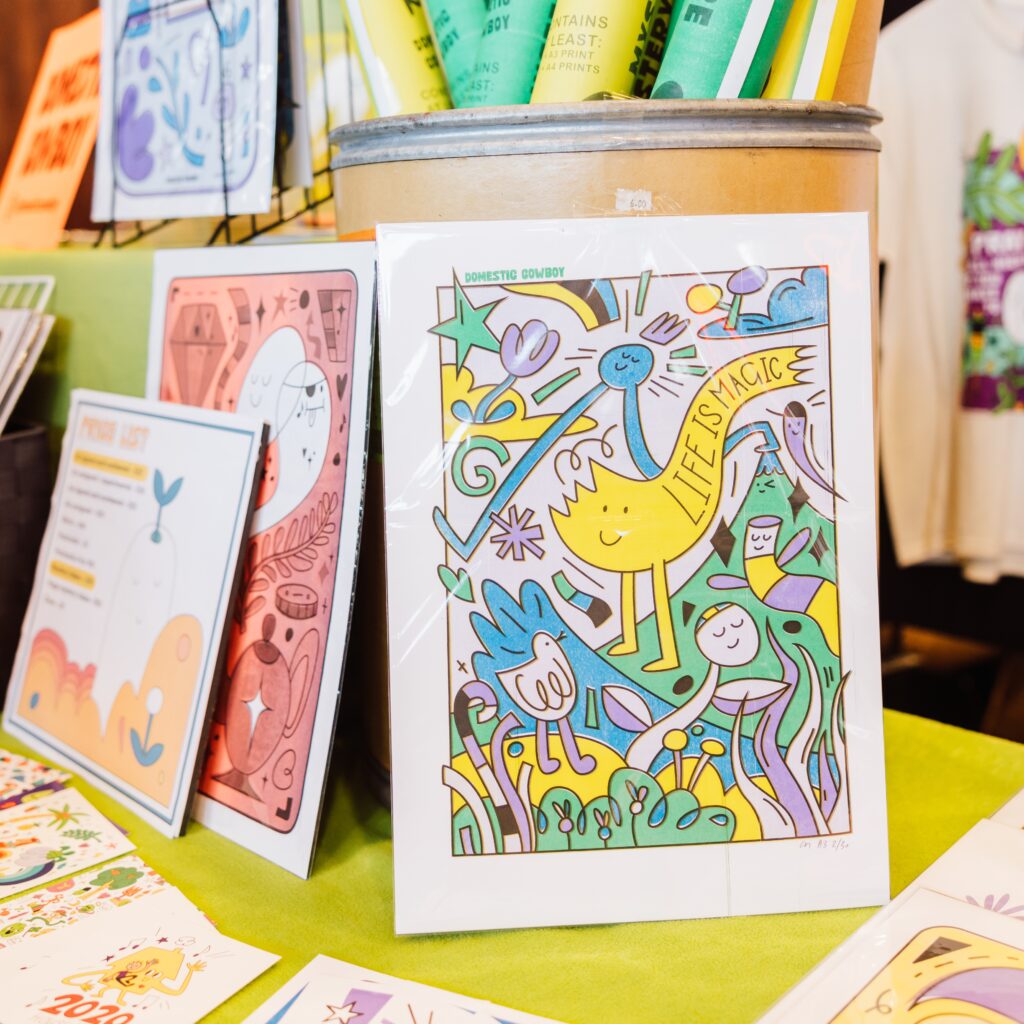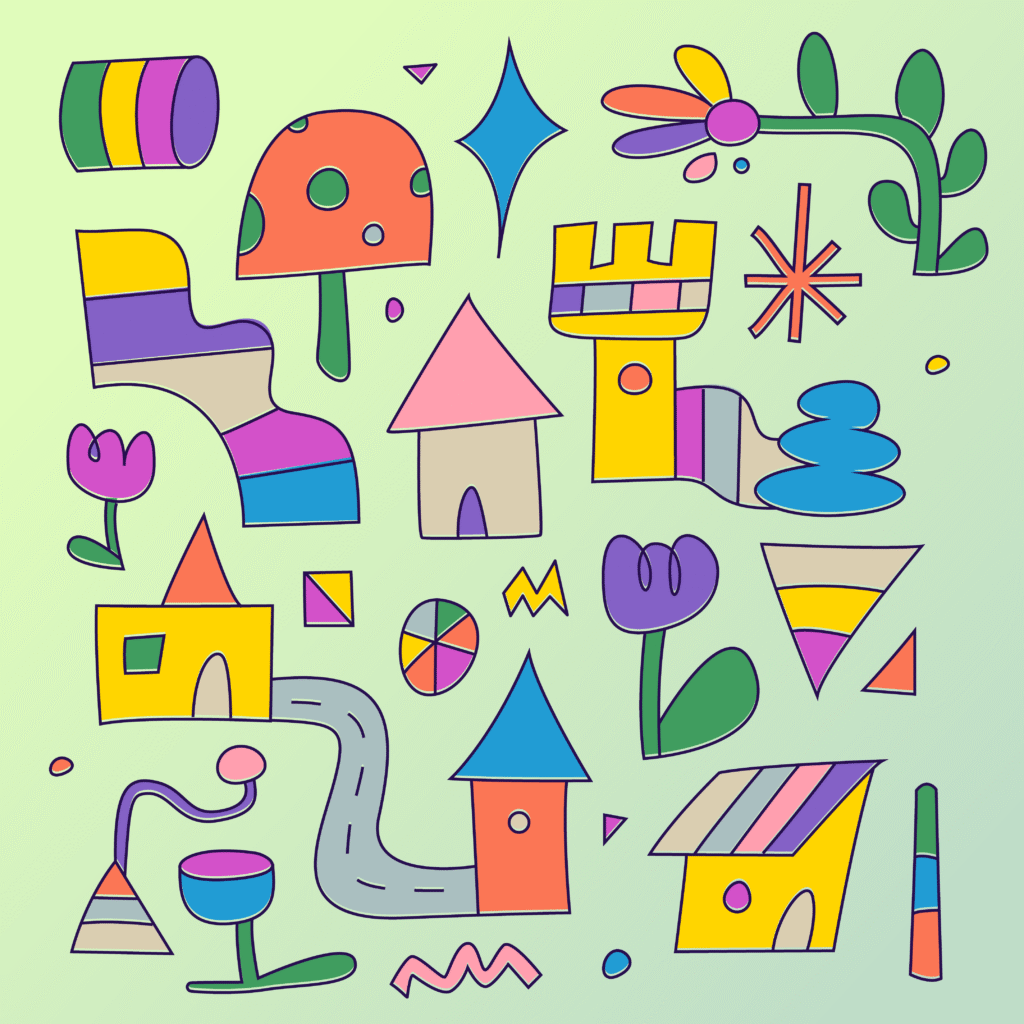
Creative work focused around inclusion and play
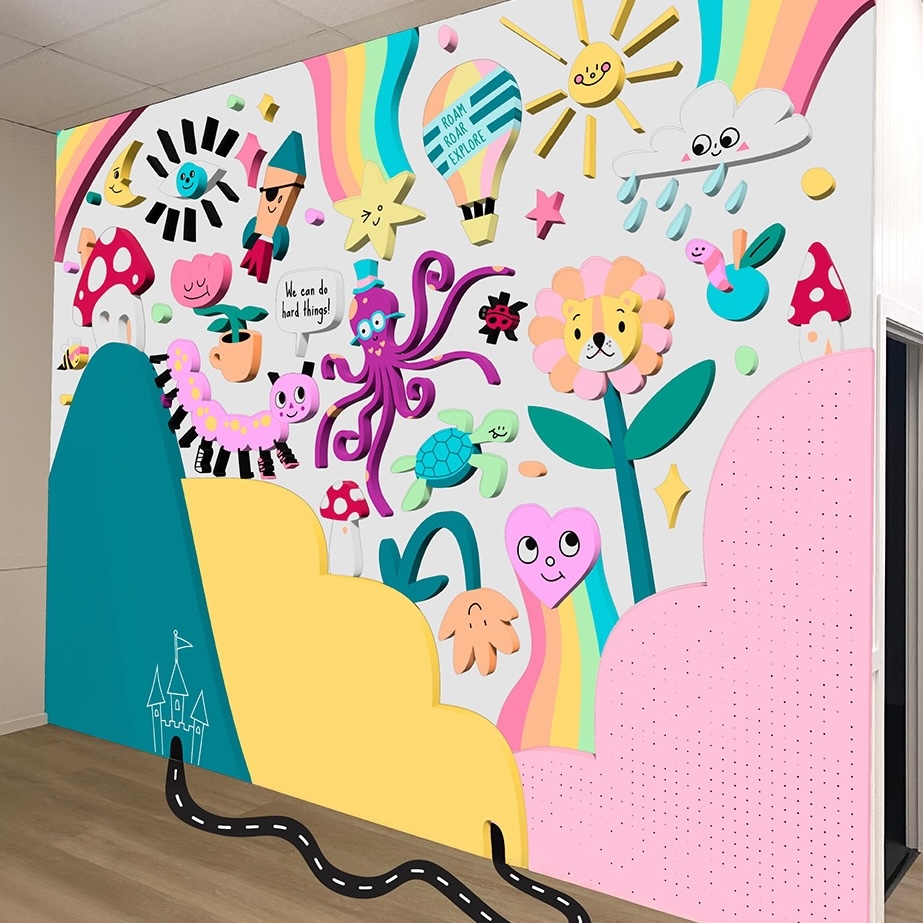
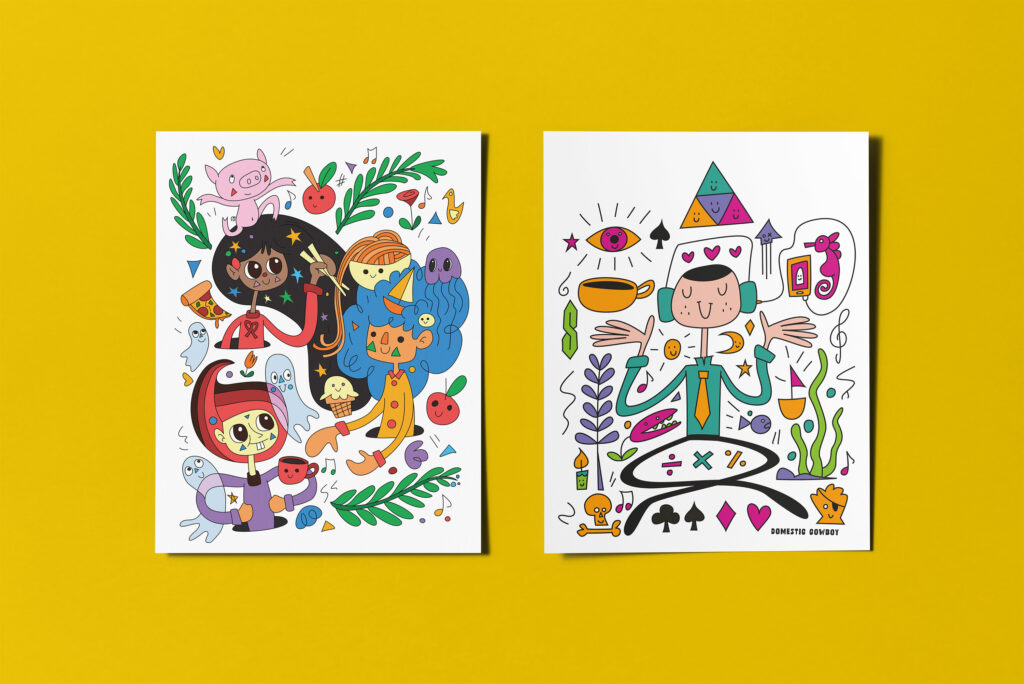
We work in collaboration with communities, schools and organisations to create unique, creative designs made for your spaces.
Case Study: Playful Pathway for All
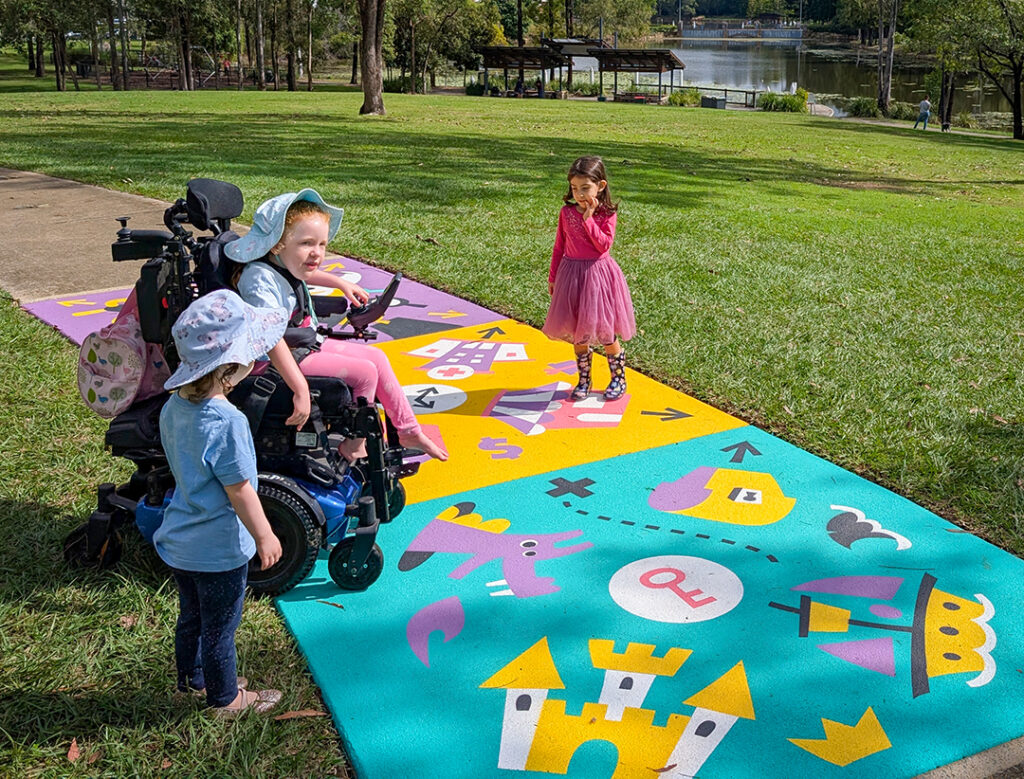
Playful Pathways for All
Playful Pathways for All is a simple, creative approach to making public spaces more inclusive for children of all abilities.
Instead of relying on expensive playground upgrades, it uses low-cost, imaginative design to turn everyday spaces like footpaths into places for play.
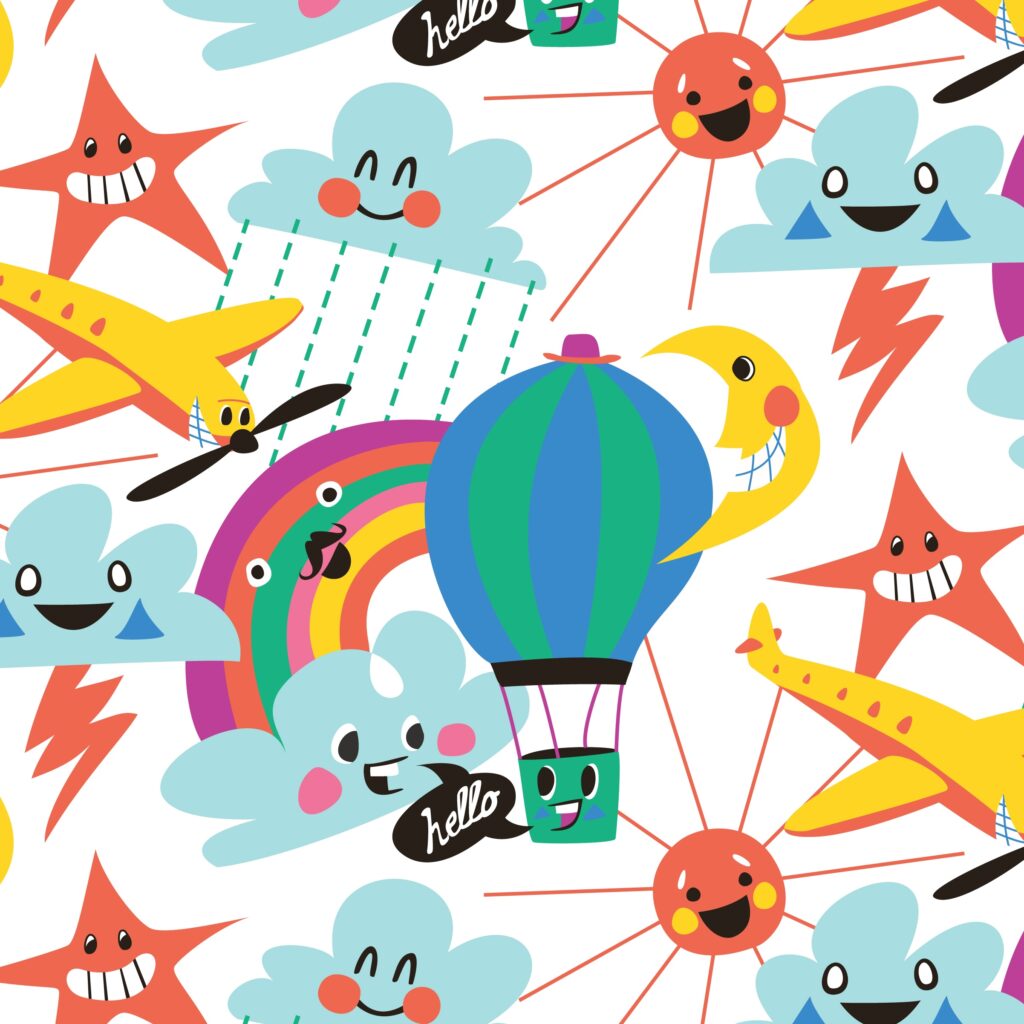
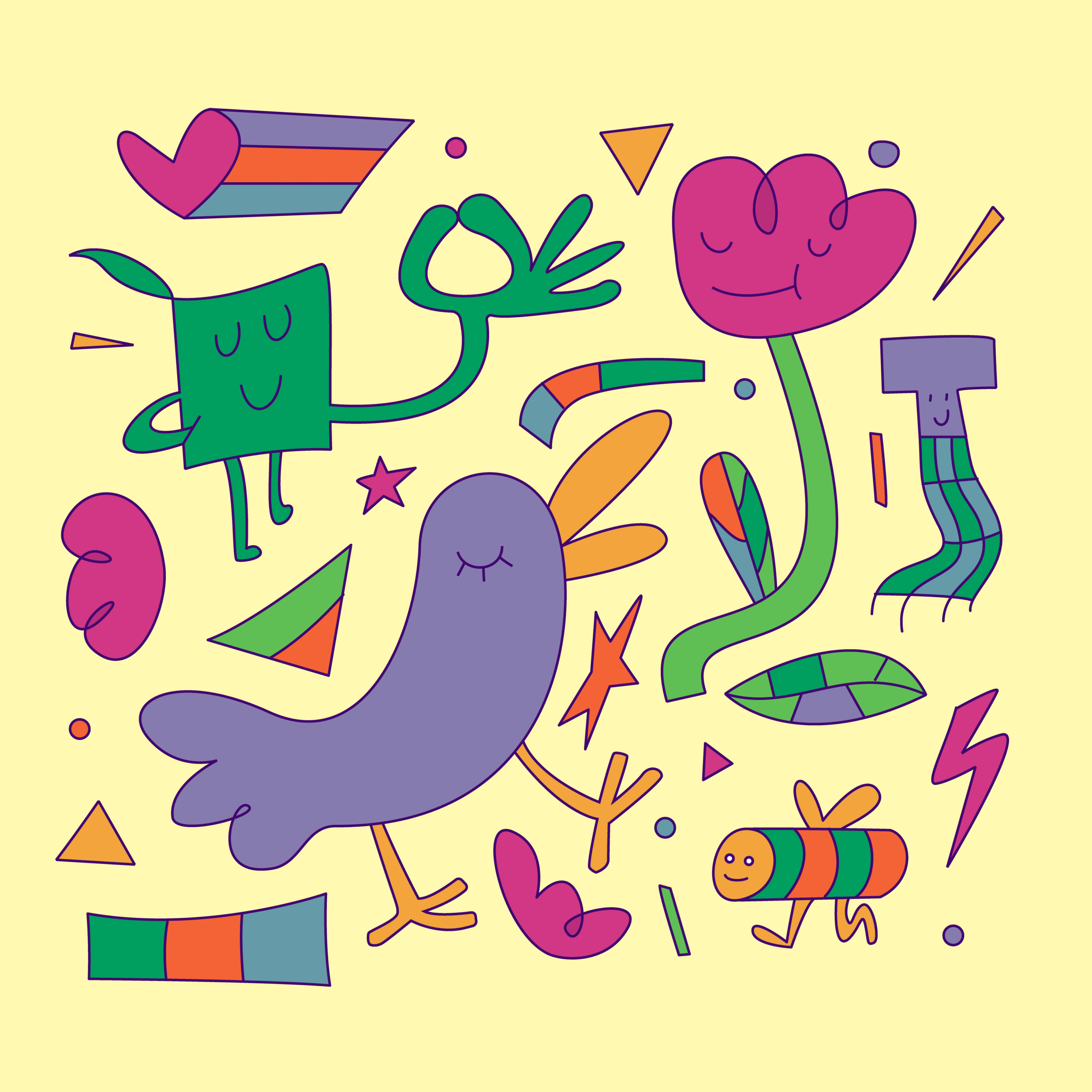
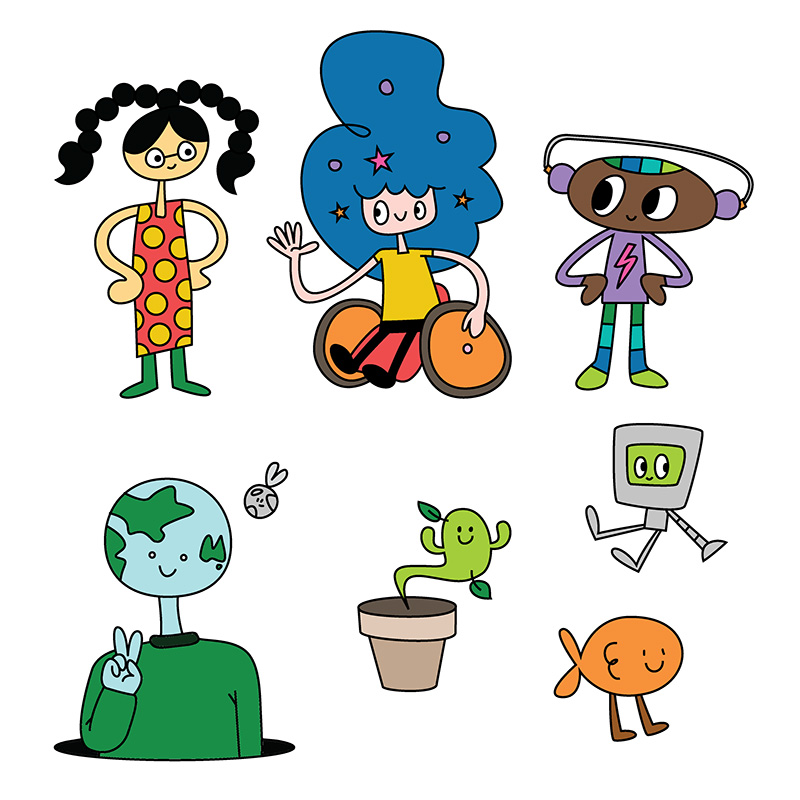
Through bright visuals, characters, and open-ended prompts, the pathway invites children and families to explore, create stories, and engage in their own way. There are no rules or instructions, just opportunities for imagination and interaction.
The project was shaped by real experiences of inaccessible and repetitive playgrounds, and a belief that inclusion doesn’t have to be complex or costly.

Case Study: Instant Imaginary Play Spaces
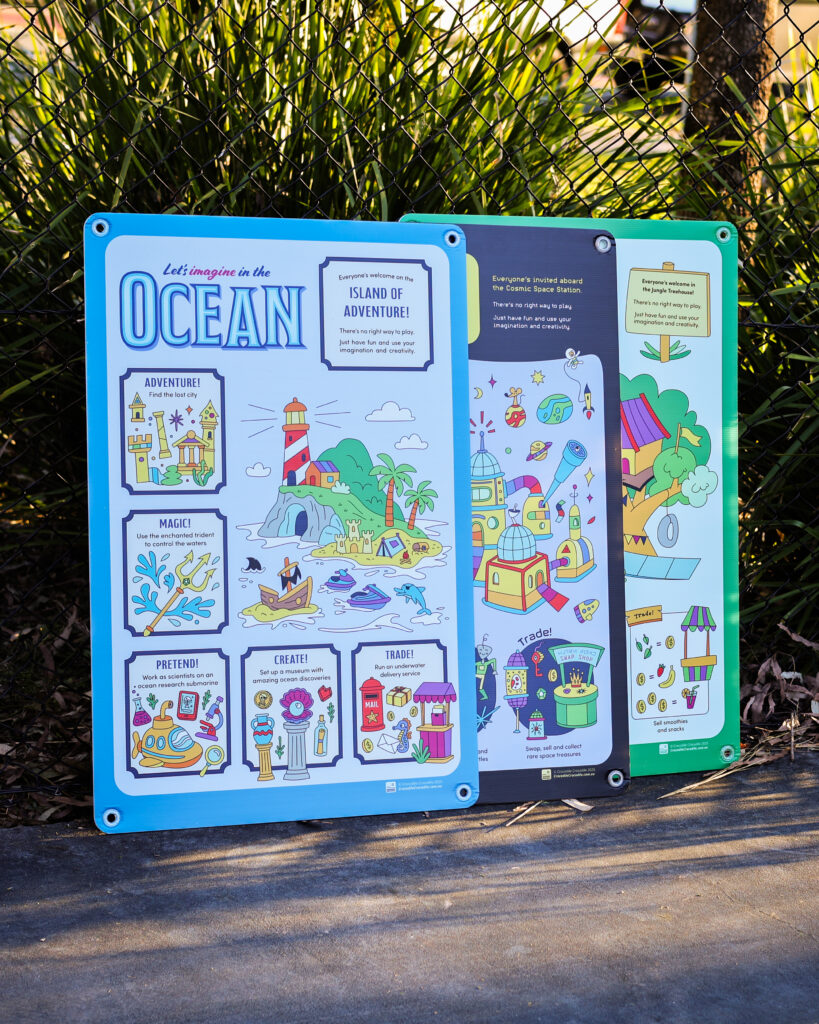
Instant Imaginary Play Spaces
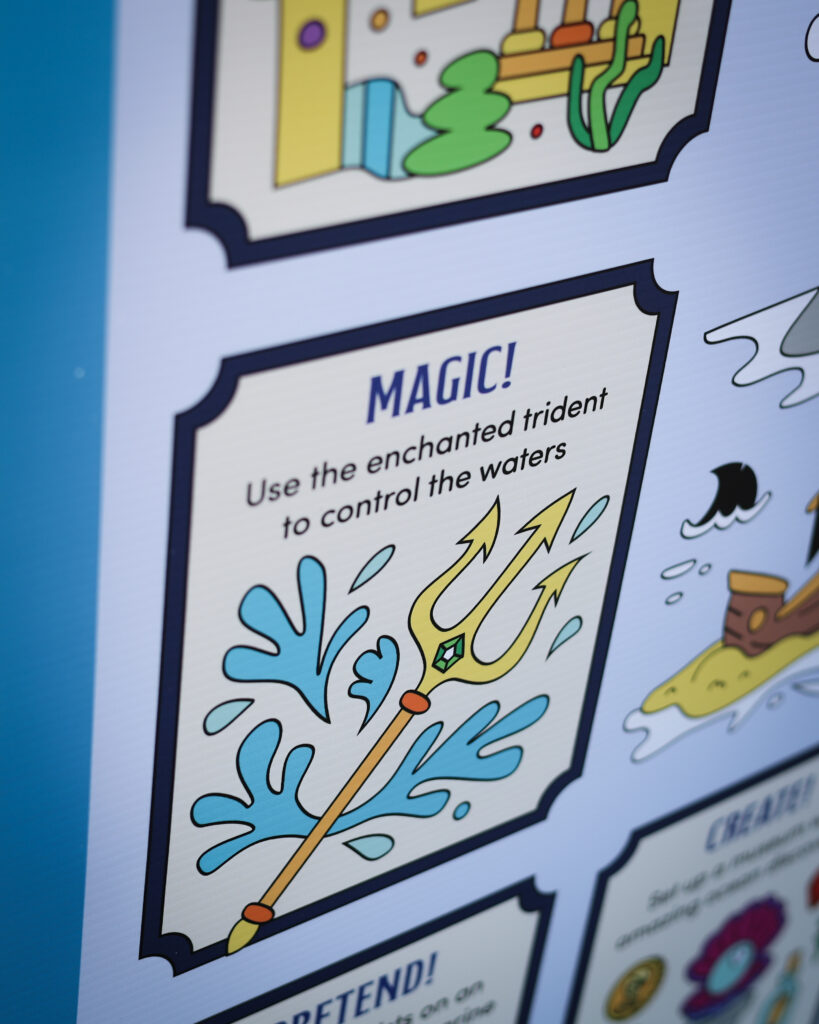
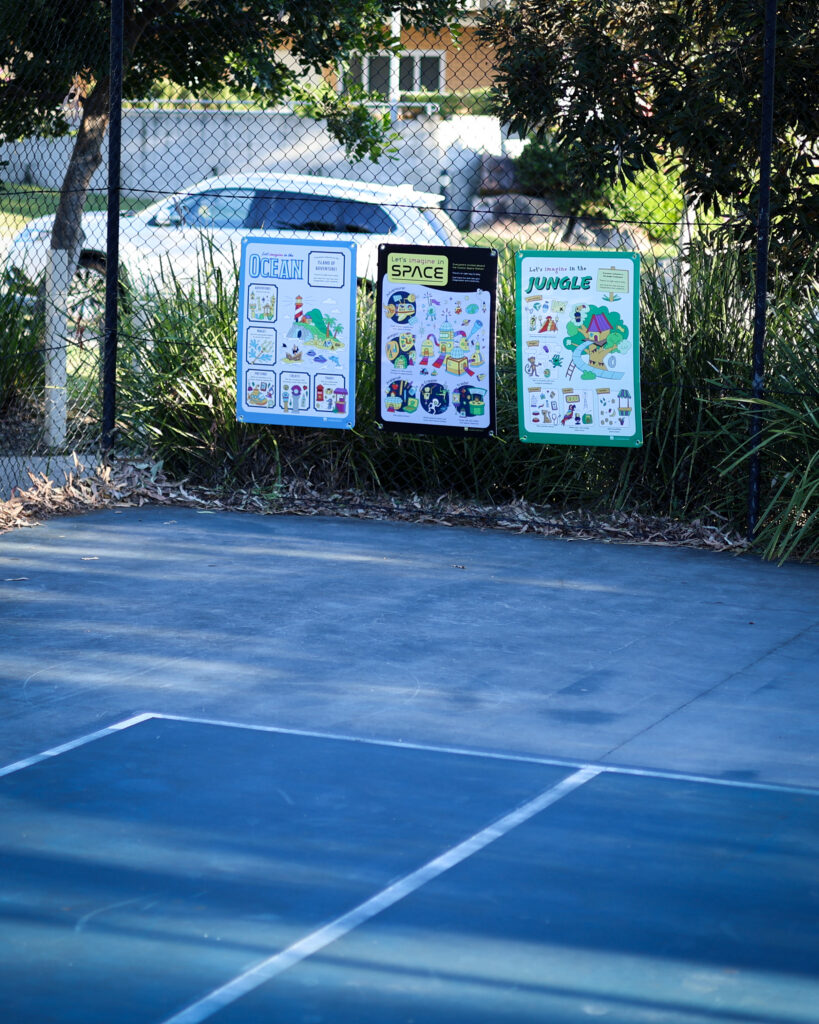
Our imaginary play signs are designed to support open ended, inclusive play in schools, playgrounds, therapy spaces, and community settings.
Developed from lived experience, the posters encourage children to create shared games, stories, and imaginative worlds together without relying on large playground equipment or physically demanding activities.
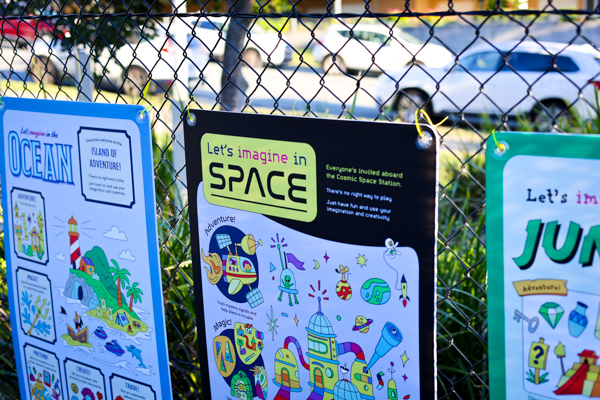
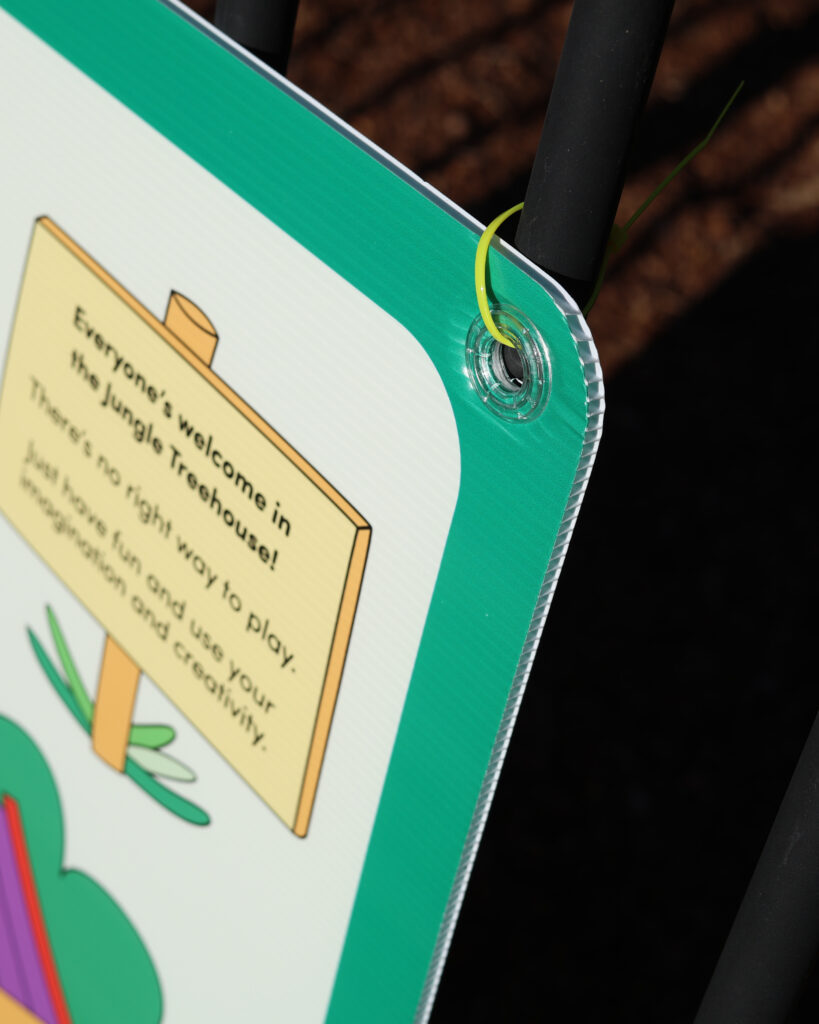
The posters can be attached to fences and outdoor areas, or used indoors as provocations inspired by children’s interests. Suitable for children aged 3 to 10.
Current themes include:
- Ocean
- Space
- Jungle
Why are they inclusive?
The posters focus on imaginary play rather than physical challenge. This allows children to participate in different ways, regardless of mobility, confidence, communication style, or developmental level.
Designed with children who use wheelchairs considered from the beginning, the posters encourage shared play between children of different abilities, ages, and skill levels.
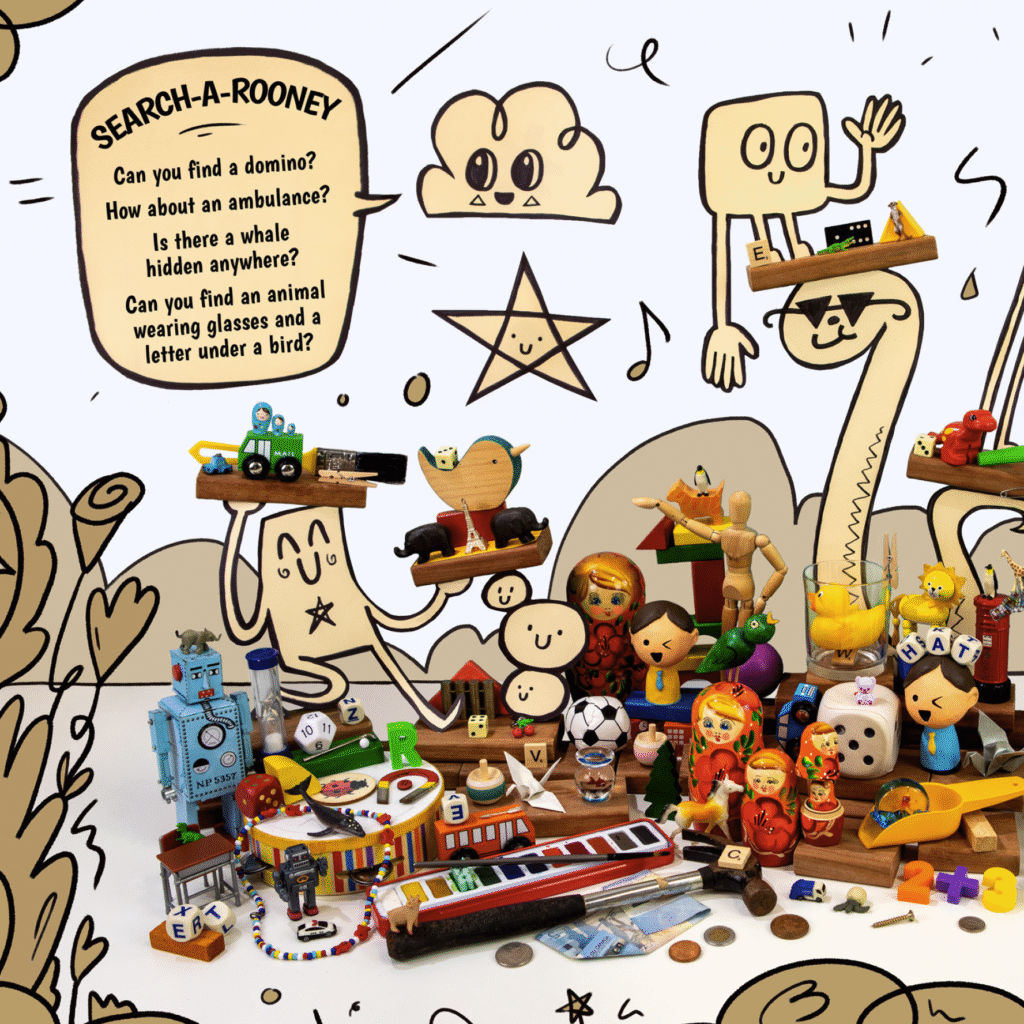
They also support educators, therapists, and families by providing simple prompts that help children begin imaginative play together.
Design work